
Freshwater Pool Ready for Summer: 10-Step Naked System Checklist
Get your freshwater pool ready for summer with this practical 10-step checklist for the Naked System. Covers TDS, winter mode, timers, testing (pH/alkalinity/copper), cleaning, safety, and ongoing maintenance.
Freshwater Pool Ready for Summer: 10-Step Naked System Checklist
The weather’s warming up and the pool is about to get heavy use. If you’ve got a freshwater pool running the Naked System, this quick checklist will help you start summer with clear water, safe swimming, and fewer “why is it doing that?” moments.
If you’ve already tested your water, you can jump straight to the calculator: Use Pool Calculator →.
Before you start: what’s “different” about a Naked System?
The key difference is that your primary day-to-day control points are typically pH, alkalinity, copper, and TDS/conductivity (not stabiliser/CYA like traditional chlorinated pools).
If you want the deeper chemistry context (ideal ranges + what not to add), read: Fresh Water, Low Chemicals: Your Guide to Naked System Chemistry →
The 10-step summer-ready checklist
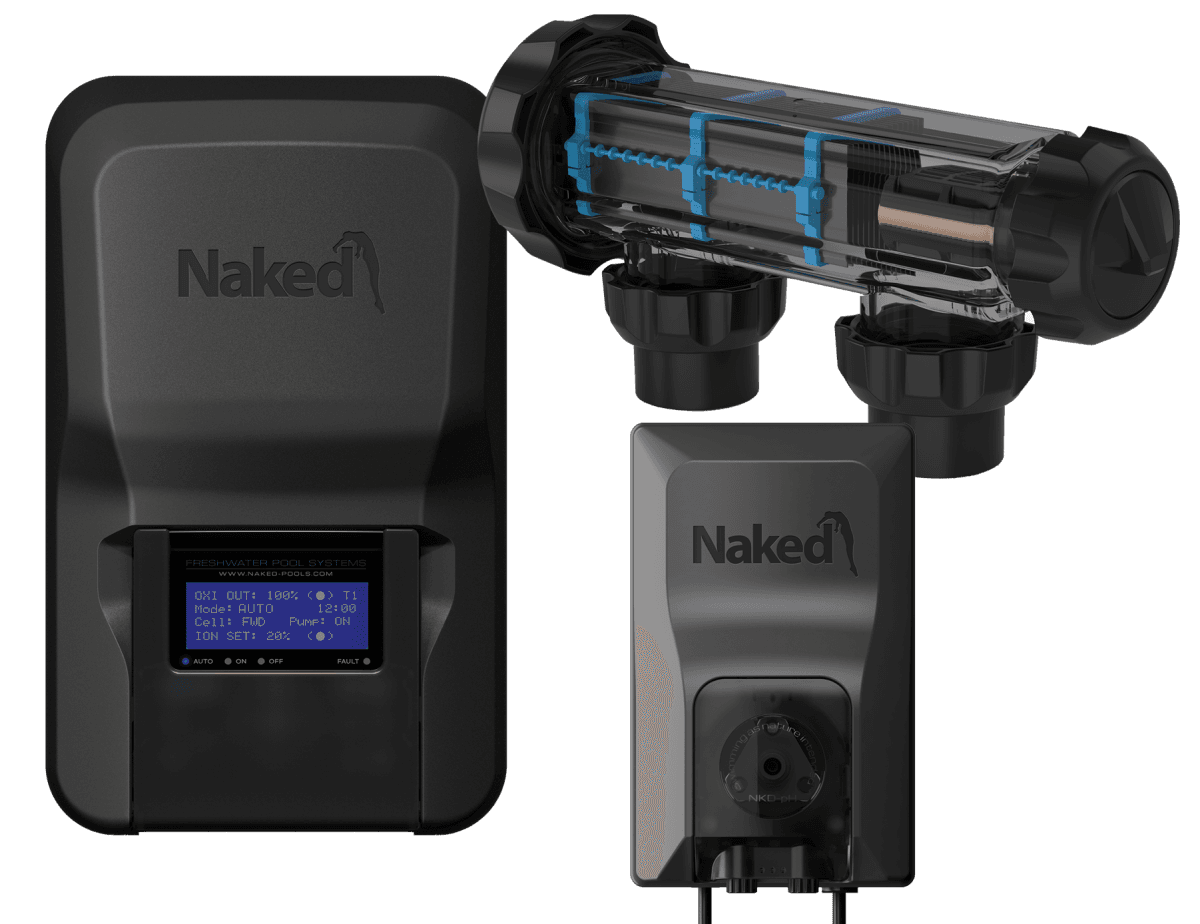
Step 1: Check over your Naked Freshwater System
- Make sure there are no faults or alerts on the controller.
- Confirm your pool is not still in winter mode (if you enabled it).
- Check TDS / conductivity and make sure you’re in the operating range recommended by your installer/manual.
- Review pump timers for summer: longer days + warmer water generally mean you’ll need more circulation.
Official references:
- What is TDS? Naked Support: What is TDS →
- Winter mode / winterising: Naked Support: Winterising your pool →
- Timers: Naked Support: Adjusting the clock and timers →
Pro tip: If you changed run-times during winter, summer is when “almost enough filtration” becomes “not enough” very quickly.
Step 2: Test the water (pH, alkalinity, copper)
At the start of summer, test more often until things stabilise — especially after heavy swimming, storms, or topping up with fresh water.
- pH: keeps the system effective and swimmers comfortable.
- Total alkalinity (TA): stabilises pH so it doesn’t bounce around.
- Copper: the core “sanitiser” value you’ll keep in range for algae control.
Helpful reads:
- How to read strips: [Pool Test Strip Results Explained →](/blog/pool-test-strip-results-explained)
- Enter results and get plain-English advice: [Use Pool Calculator →](/#calculator)
Step 3: Remove and clean the pool cover (if you have one)
If you’re using a pool cover/blanket:
- Remove it carefully so debris doesn’t fall into the pool.
- Clean it and store it dry (mouldy blankets = a bad summer start).
Covered pools can “trap” by-products and reduce airflow — if you keep the cover on during summer, plan for more frequent checks.
Step 4: Clean and remove debris
Get the winter build-up out *before* you start fine-tuning chemistry:
- Skim leaves/twigs
- Empty skimmer baskets
- Empty the pump strainer basket
Step 5: Fill the pool to the right level
Top up to the recommended level for good circulation and skimming — commonly half to three-quarters up the skimmer opening.
Low water can cause:
- Poor skimming
- Pump issues (air getting sucked in)
- Unstable readings (after top-ups)
Step 6: Vacuum and brush
Once water is circulating:
- Vacuum the floor (manual or robotic)
- Brush walls and steps (especially shaded areas)
- Give the robot a full cycle if you have one
This removes biofilm and dust that can consume sanitising capacity and make the water look dull.
Step 7: Lock in a simple summer maintenance rhythm
The easiest summer plan is the one you’ll actually do:
- Weekly: test pH + copper, empty baskets, quick brush
- Fortnightly: deeper clean, filter check/backwash as required
- After big swim days / storms: re-test and adjust promptly
If you’re not sure what’s causing a problem, start here: Pool Troubleshooting Guide →
If you want a plain-English chemicals overview: Pool Chemicals Guide →
Step 8: Safety first (Australia)
Before the first big summer weekend:
- Check the pool fence, gates, and latches
- Make sure CPR signage and safety equipment are in good condition
- Confirm you’re compliant with the latest requirements in your state/territory
More tools and references: Resources →
Step 9: Use the tools (and keep it simple)
Two things reduce headaches fast:
- Use the official system tools/support resources when you need system-specific guidance
- Use PoolCalculator.com.au to keep a consistent “one place” view of your readings and fixes
Official support hub: Naked Support Centre →
Step 10: Enjoy summer (and keep a plan for support)
If something feels off, don’t wait two weeks hoping it fixes itself — test, adjust, and re-test.
If you’d rather hand it off during the busy season, you can also use a mobile professional. Directory (official): Naked Freshwater Pool Professionals Directory →
Quick “what to do next” links
- Enter your latest readings: [Use Pool Calculator →](/#calculator)
- Learn the chemistry basics for Naked pools: [Naked System Chemistry Guide →](/blog/fresh-water-low-chemicals-naked-system-chemistry)
- If your water looks wrong: [Pool Troubleshooting Guide →](/guides/pool-troubleshooting-guide)
Disclaimer: This checklist is general guidance based on manufacturer resources and common best practice. Always follow your system manual and seek professional advice if you’re seeing persistent algae, cloudy water, or equipment alerts. *PoolCalculator.com.au is not affiliated with Naked Pools.*