
How to Test Copper in Pool Water: Freshwater Pool Owners Guide
Copper is the primary sanitizer in freshwater and mineral pools—not chlorine. Maintaining the correct copper level (2-4 PPM) is essential for preventing algae and keeping your pool safe to swim. Here's how to test copper accurately.
Why Copper Testing is Critical for Freshwater Pools
Traditional chlorine pools use 3-5 PPM of chlorine to sanitize water. Freshwater pools work differently:
- Copper (2-4 PPM): The primary sanitizer that prevents algae growth
- Silver: Natural antibacterial agent that eliminates harmful bacteria
- Chlorine (0-0.5 PPM): Minimal residual—less than tap water
Without adequate copper, your freshwater pool is vulnerable to algae outbreaks. With too much copper, you risk staining pool surfaces. Accurate testing is essential.
Key fact: Freshwater pools maintain 0-0.5 PPM chlorine compared to 3-5 PPM in traditional pools. This is why they don't sting eyes or irritate skin.
The Pool Shop Testing Problem
Many freshwater pool owners discover that pool shop machines incorrectly read copper levels. This happens because:
- Machines are calibrated for traditional chlorine pools
- Copper can interfere with other sensor readings
- Pool shop staff may not be familiar with freshwater systems
"We unfortunately do come across instances where the 'machines' at pool shops incorrectly read the copper levels. If the results are the same [as home strips], fantastic! If they are different, we recommend trusting the Naked Pool & Spa Test Strips for an accurate reading."
How to Test Copper: Step-by-Step Guide
What You'll Need
- Freshwater pool test strips (must measure copper)
- Test bottle with colour chart for copper matching
- Natural light or bright white light
- Timer or stopwatch
Testing Process
- Take one test strip from the bottle—one strip is all you need
- Dip in pool water for 5 seconds with gentle back-and-forth motion (not a quick in-and-out)
- Remove and shake briskly once to remove excess water (don't over-shake or wiggle)
- Wait exactly 15 seconds for colours to develop
- Match pH and alkalinity first against the bottle colour chart
- Fold the strip over to create a white background behind the copper pad
- Match copper colour against the bottle chart (light pink to dark pink)
- Complete within 30 seconds for most accurate results
Pro tip: Folding the strip to create a white background is essential for accurate copper reading. The copper pad shows a range from very light pink (low) to much darker pink (optimal range).
Reading Your Copper Results
| Copper Level | Status | Action Required |
|---|---|---|
| Below 2 PPM | Too Low | Algae risk. Add copper per system instructions. |
| 2-4 PPM | Optimal | Perfect. No action needed. |
| Above 4 PPM | Too High | Staining risk. Consult manufacturer. |
Recommended Copper Test Strips
Recommended testing products
Fresh strips and a clarifier backup for diagnosing and clearing pool water faster.
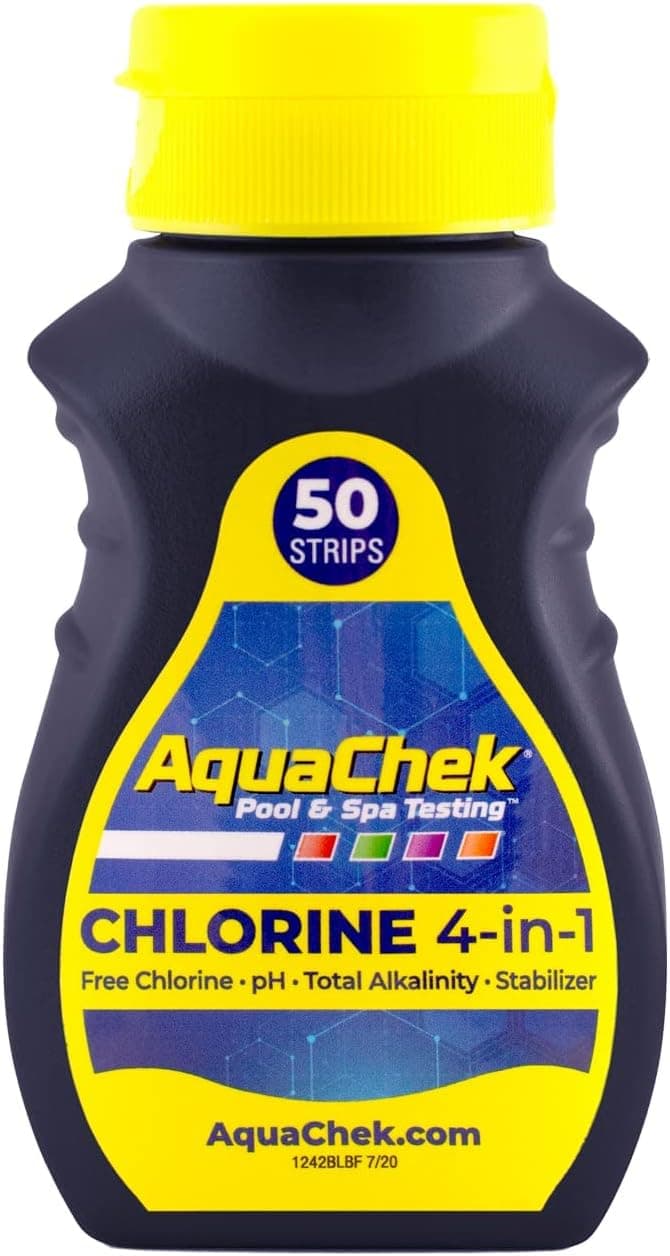
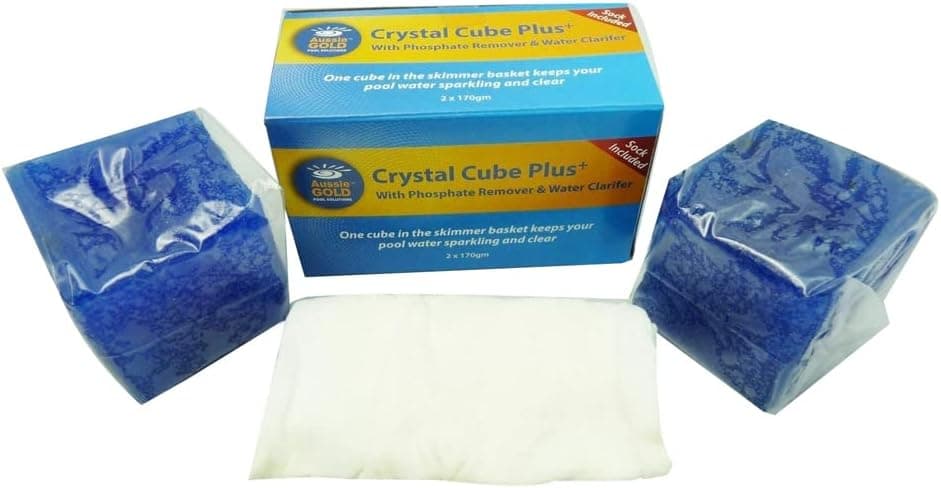
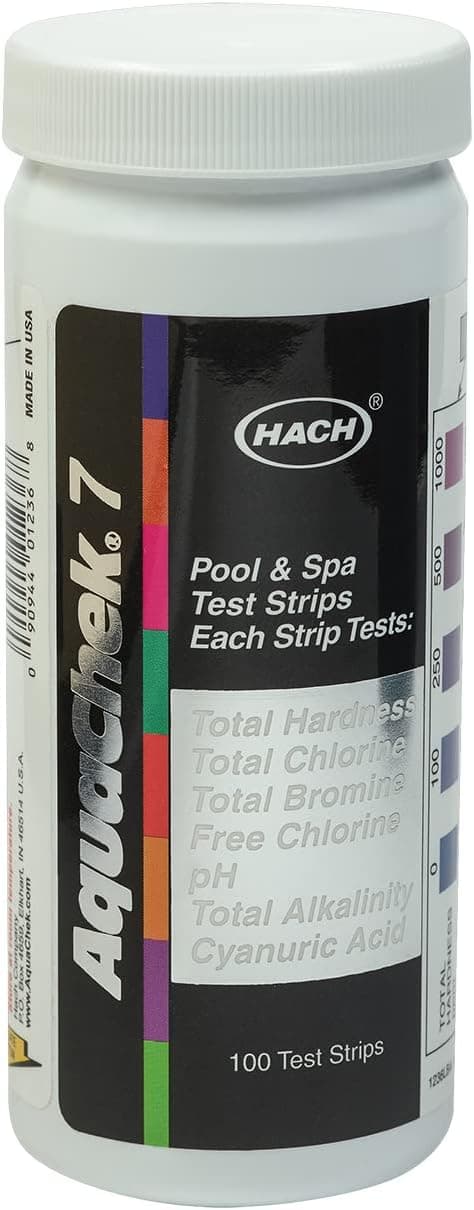
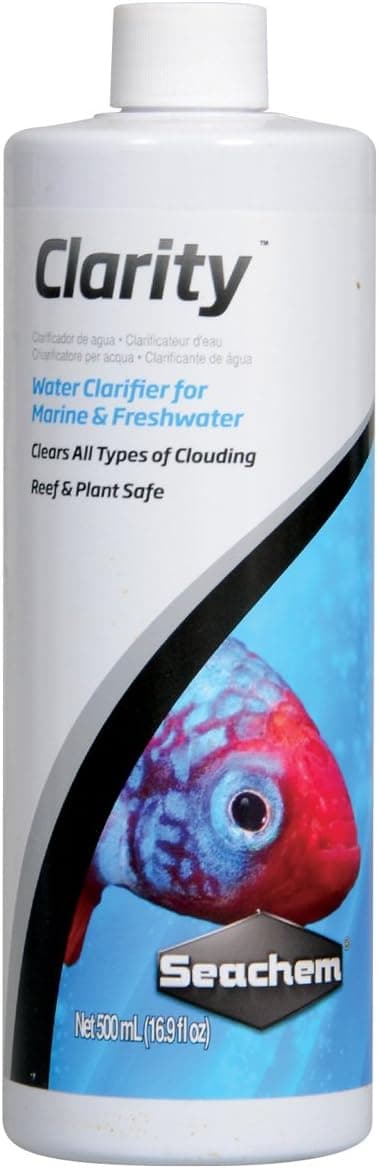
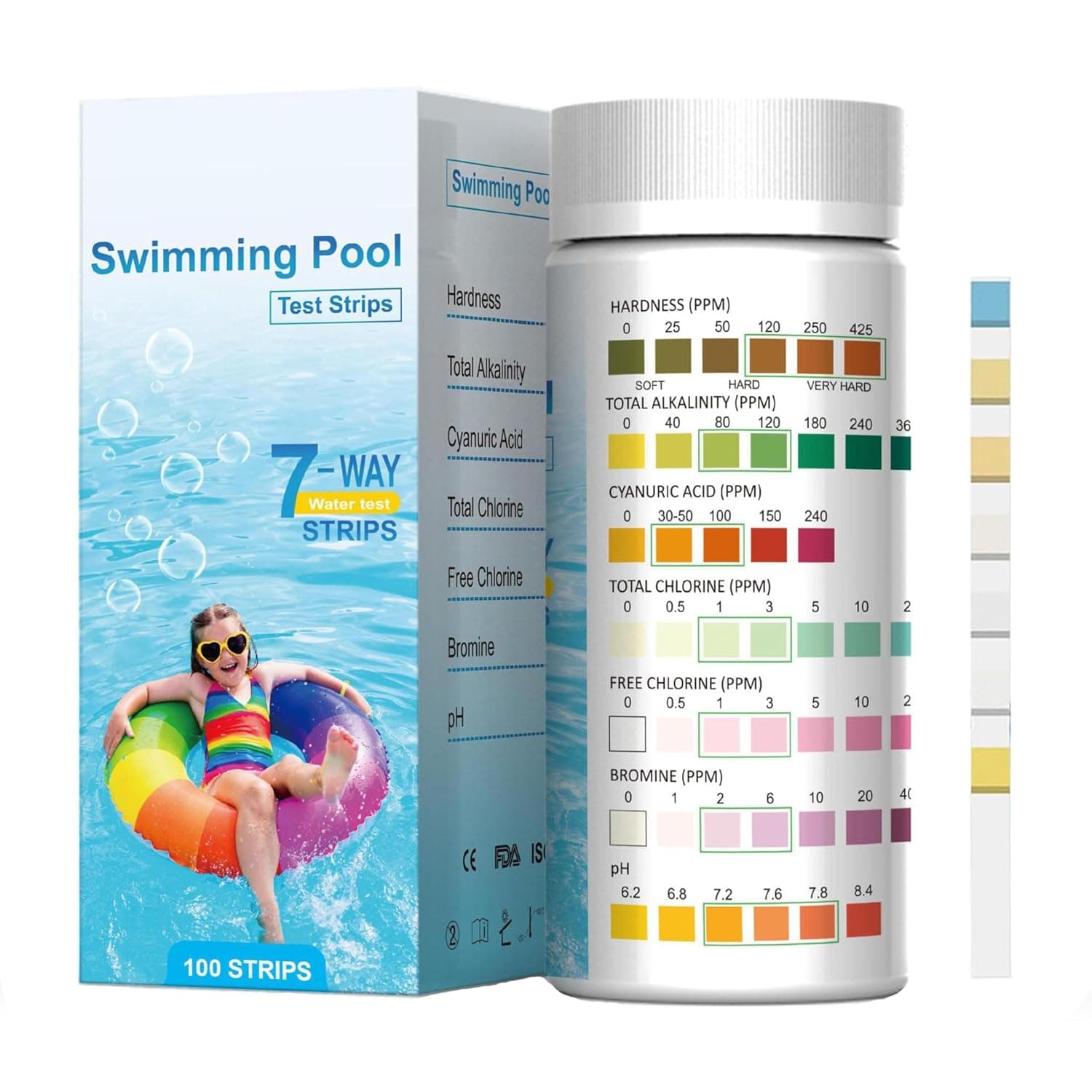
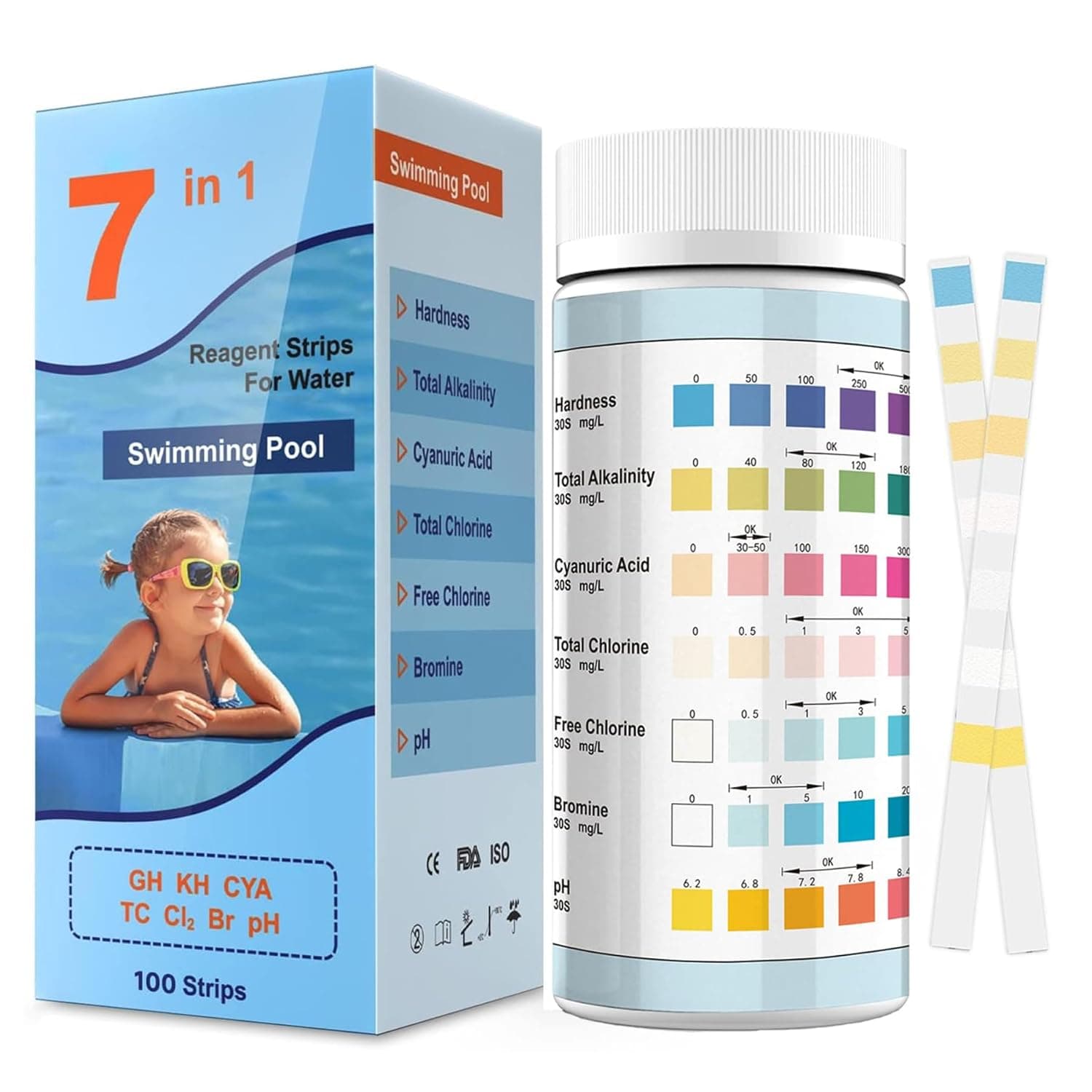
As an Amazon Associate, we earn from qualifying purchases.
When to Test Copper Levels
Weekly to Fortnightly (Summer)
During peak swimming season, test copper regularly. High temperatures and heavy swimmer load can affect copper effectiveness.
Every 2-4 Weeks (Winter)
During low-use periods, less frequent testing is typically sufficient. However, always test after heavy rain or when adding chemicals.
After Specific Events
- After heavy rain: Rain dilutes copper levels
- After topping up water: Tap water dilutes copper
- After backwashing: Can affect overall water balance
- If algae appears: Copper likely too low
What Affects Copper Levels?
Factors That Lower Copper
- Heavy rain (dilution)
- Topping up with tap water
- Backwashing the filter
- Leaks in the system
- Extended periods without system operation
Factors That May Raise Copper
- Overdosing copper algaecide
- System malfunction (adding too much copper)
- Reduced water volume (lower than normal level)
- Evaporation without topping up
Troubleshooting Copper Issues
Copper Always Reads Low
If copper consistently tests below 2 PPM:
- Check your freshwater system is operating correctly
- Verify the mineral chamber is not depleted
- Ensure pump run time is sufficient (8+ hours daily in summer)
- Check for leaks that may be diluting the water
Copper Always Reads High
If copper consistently tests above 4 PPM:
- Check system settings for dosing rate
- Verify the system isn't adding copper continuously
- Contact your freshwater system manufacturer for service
- Avoid adding additional copper algaecide products
Inconsistent Readings
If readings vary dramatically between tests:
- Ensure you're testing at the same time each day
- Wait 2-4 hours after pump cycle before testing
- Test away from return jets (water may not be fully mixed)
- Check test strips aren't expired (18-24 month shelf life)
Copper vs Chlorine: Understanding the Difference
The fundamental difference between traditional and freshwater pools:
| Parameter | Traditional Pool | Freshwater Pool |
|---|---|---|
| Primary Sanitizer | Chlorine | Copper + Silver |
| Chlorine Level | 3-5 PPM | 0-0.5 PPM |
| Copper Level | Not measured | 2-4 PPM |
| Eye Irritation | Common | Rare to none |
| Skin Irritation | Common | Rare to none |
| Chemical Smell | Strong | None |
Frequently Asked Questions
Can I use standard pool test strips for copper testing?
No—standard chlorine pool test strips don't measure copper. You need test strips specifically designed for freshwater and mineral pools that include copper testing.
Why do pool shops get different copper readings?
Pool shop machines are calibrated for traditional chlorine pools and often misread copper in freshwater systems. Trust home test strips designed for mineral pools for routine testing.
Is copper safe for swimmers?
Yes—at the recommended 2-4 PPM level, copper is safe for swimmers of all ages. In fact, copper is an essential mineral in our diet. The levels used in pools are carefully controlled to be effective yet safe.
What if I can't get my copper levels up?
If copper consistently reads low despite proper testing, the issue may be with your freshwater system's mineral chamber. Contact the manufacturer or a certified technician to inspect and service the system.
Related Resources
- Freshwater Pool Test Strips: Guide to Testing Copper, pH & Alkalinity
- Best Pool Test Strips 2026: Copper, pH & Alkalinity Testing Compared
- When to Test Pool Water: Seasonal Testing Schedule for Australians
Australian Pool Owner? Regular copper testing is essential for freshwater pool maintenance. All recommended test strips are available on Amazon Australia with fast shipping.